JLPT N3・N5 Vocabulary – Difference between “さらに” and “もっと”

Table of Contents
1. Difference between “さらに” and “もっと”
2. さらに
3. もっと
4. Let’s Compare
5. Summary
6. Similer Articles
7. Comment
Q: What is the difference between “さらに” and “もっと”?
A: “さらに” expresses that an event is added or that the degree increases, while “もっと” is used when simply increasing the amount or degree. Let’s look at each in more detail.
さらに (JLPT N3)
[Meaning]
① Something of the same kind overlaps or is added
② The degree increases compared to before
[Examples]
今でさえ忙しいのに、さらに忙しくなりそうです。(①)
Even though I’m already busy, it looks like I will become even busier.
研究を進めることで、さらに理解が深まりました。(②)
By advancing my research, my understanding deepened even further.
“There are two main ways to use “さらに”.
The first is when something similar is added to the current state.
A close synonym is “その上” (on top of that).
[Examples]
台風で停電したうえに、さらに断水まで起こりました。
In addition to the power outage caused by the typhoon, there was even a water supply cut.
⇒ This means that, along with the power outage, the trouble of a water outage also occurred.”
彼は提出期限を守りませんでした。さらに、言い訳ばかりしています。
He did not meet the submission deadline. Furthermore, he keeps making excuses.
物価が上がり、さらに税金まで引き上げられました。
Prices have gone up, and taxes have even been raised further.
The second usage is when “the degree increases as time goes by.” Synonyms include “ますます” (more and more) and “いっそう” (all the more).
[Examples]
大人になるにつれて、彼女はさらに美しくなりました。
As she grew into an adult, she became even more beautiful.
⇒ This expresses how, in the process of growing from a child into an adult, she became even more beautiful than before.
努力の甲斐があって成績が上がりました。さらに努力すれば、もっと上がるでしょう。
Thanks to her efforts, her grades improved. If she makes even more effort, they will improve further.
技術は日々進歩し、今後さらに発展していくでしょう。
Technology is advancing day by day and will continue to develop even further in the future.
Check out the related article!
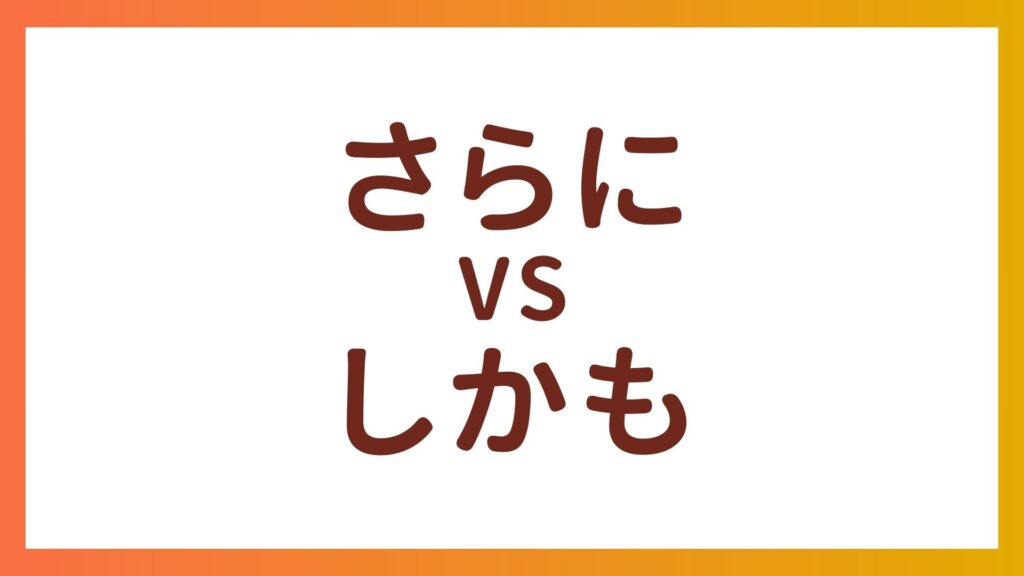
The difference between “さらに” and “しかも”
もっと (JLPT N5)
[Meaning]
To add to the amount or degree of something that already exists or has been presented
[Examples]
もっと字が上手になりたいです。
I want to become better at writing characters.
もっと食べてください。
Please eat more.
もっと早く来ればよかったです。
I should have come earlier.
“もっと” means “to further add to the amount or degree of something that already exists or has been presented.” Compared to “さらに,” it is characterized by expressing a more concrete and straightforward increase.
[Examples]
この水の量では少ないですよ。もっと入れてください。
This amount of water is not enough. Please add more.
⇒ This means adding more to the water that has already been poured.
カフェラテに砂糖を入れて、もっと甘くしましょう。
Let’s add sugar to the café latte to make it sweeter.
この問題について、もっと詳しく説明していただけますか。
Could you please explain this problem in more detail?
Let’s Compare
In the following cases, using either expression is not a major mistake, but there is a slight difference in meaning. Let’s think about the nuance.
[Example]
① 日常会話の日本語だけでなく、さらに上のレベルに進みたいです。
② 日常会話の日本語だけでなく、もっと上のレベルに進みたいです。
① expresses moving step by step from the everyday level to the business level. It gives the image of building up gradually from the current level.
②, on the other hand, conveys the nuance of wanting to aim for a higher level in general, rather than being conscious of each step.
Now, in the following case, which expression is more suitable?
[Example]
① 遠慮しないでさらに食べてください。
② 遠慮しないでもっと食べてください。
The correct answer is ②.
The speaker thinks “the amount the other person is eating now is not enough,” so using “もっと” is natural. When you simply want to increase the amount, you use “もっと.”
Summary
[さらに]
- ① Expresses that “another similar thing is added to the current state.” A synonym is “その上 (n top of that).”
- ② Expresses that “the degree increases as time goes by.” Synonyms are “ますます (more and more)” and “いっそう (all the more).”
- It is used with the image of moving up step by step from the current level.
[もっと]
- Means “to further add to an already existing amount or degree.”
- It expresses a concrete and straightforward increase.
- It is used when showing the feeling of aiming for a higher level, rather than focusing on gradual steps.
Similar Articles
▼ Subscribe to Our Newsletter ▼
Receive free tips for learning Japanese!


