
JLPT N4 Grammar – Difference between “〜なくてはならない” and “〜なければいけない”

Table of Contents
1. Difference between “〜なくてはならない” and “〜なければいけない”
2. 〜なくてはならない
3. 〜なくてはいけない
4. Let’s Compare
5. Summary
6. Similer Articles
7. Comment
Q: Can “〜なくてはならない” and “〜なければいけない” be used interchangeably?
A: In many cases, they can be used interchangeably. However, “〜なくてはならない” is often used in contexts that indicate strong obligations such as laws or regulations, while “〜なければいけない” is more commonly used to express everyday obligations or necessities.
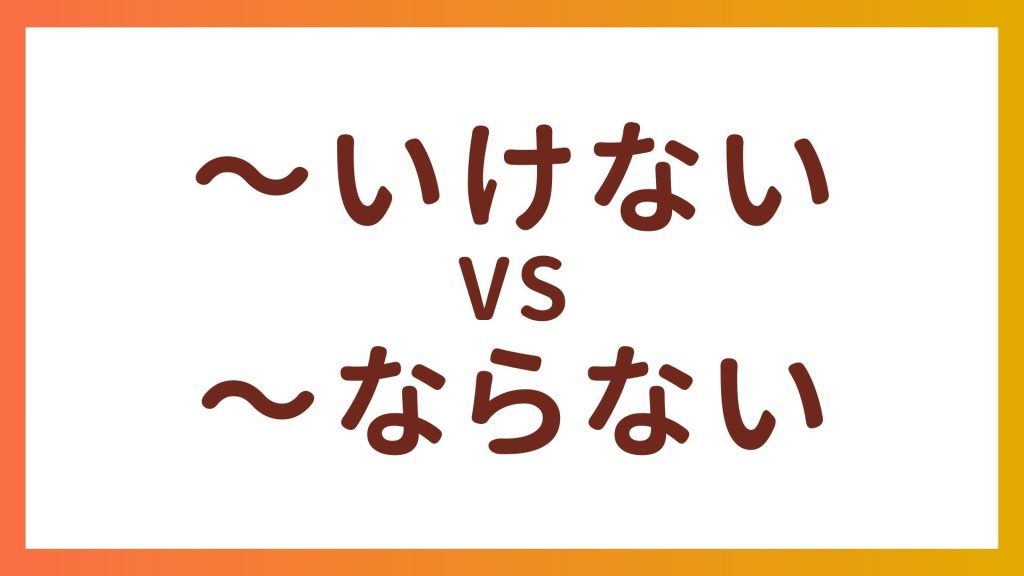
Let’s also make sure to understand
the difference between
“〜いけない” and “〜ならない”!
〜なくてはならない (JLPT N4)
[Meaning]
Expressing obligation to perform an action
[Rule]
[V] Verb ない form い +くてはならない
[Examples]
退社するときは1か月前に言わなくてはならないんです。
When leaving a company, you must give notice at least one month in advance.
この書類は必ず提出しなくてはなりません。
This document must be submitted.
明日は8時までに学校に行かなくてはならないんです。
I must go to school by 8 o’clock tomorrow.
“〜なくてはならない” and “〜なければいけない” are often interchangeable, but “〜なくてはならない” is a more formal expression and is frequently used to indicate obligations in public contexts such as laws, regulations, or moral codes.
[Examples]
車を運転するときは、シートベルトを着用しなくてはならない。(Legal Obligation)
When driving a car, you must wear a seat belt.
納税者は、期限までに税金を納めなくてはならない。(Legal Obligation)
Taxpayers must pay their taxes by the deadline.
〜なければいけない (JLPT N4)
[Meaning]
Expressing obligation to perform an action
[Rule]
[V] Verb ない form い + ければいけない
[Examples]
明日までにこの宿題を終わらせなければいけません。
I have to finish this homework by tomorrow.
この本は日曜日までに返さなければいけません。
This book has to be returned by Sunday.
面接のときはきれいな靴を履かなければいけないよ。
You have to wear clean shoes for the interview.
“〜なければいけない” is used when expressing actions or obligations that are necessary in a given situation. It is often used when the speaker imposes an obligation on themselves, or when urging the listener to take a necessary action.
[Examples]
明日は大事な会議があるから、早起きしなければいけないんだ。
I have to get up early tomorrow because I have an important meeting.
⇒ In order to be on time for the meeting, the obligation of “getting up early” arises.
日本の公共機関では並んで待たなければいけないよ。
In Japan, you have to wait in line when using public facilities.
日曜日なのに、会社に行かなければいけません。
Even though it’s Sunday, I have to go to the office.
Shortened forms of “〜なければいけない”
In written language, “〜なければいけない” is the appropriate form, but in spoken language it is often shortened into more colloquial forms. There are three common patterns.
Note: “〜だめ” is an even more casual version of “〜いけない.”
なくちゃいけない/なくちゃだめ
なきゃいけない/なきゃだめ
なくちゃ/なきゃ (the most casual form)
[Examples]
母:(前を見ていない子供に対して)ちゃんと前を見て歩かなくちゃだめよ!
Mother (to her child who isn’t looking ahead): You have to look forward and walk properly!
このレポート、明日までに提出しなきゃいけない!
I have to hand in this report by tomorrow!
お客さんが来るまでに部屋を掃除しなきゃ。
I have to clean the room before the guest comes.
Let’s Compare
“〜なくてはならない” and “〜なければいけない” can often be used interchangeably, but there is a difference in nuance.
〜なくてはならない
Often used in public contexts such as laws, regulations, or moral codes.
It expresses obligations that cannot be avoided or chosen based on individual will or judgment.
〜なければいけない
Even when used toward someone else, whether the action is actually carried out is often left to that person’s judgment.
[Example]
〇 スピード違反は罰金を支払わなくてはならない。
You must pay a fine for speeding.
△ スピード違反は罰金を支払わなければいけない。
You have to pay a fine for speeding.
⇒ Because this is a compulsory obligation under traffic laws, “なくてはならない” is more natural.
Summary
[〜なくてはならない]
- Used for obligations imposed by laws, regulations, or moral codes
- Often appears in formal or public contexts
- Expresses strong obligations that cannot be chosen or avoided by individual will or judgment
[〜なければいけない]
- Expresses actions or obligations that are situationally necessary for the speaker or the listener
- When directed at the listener, whether to actually carry out the action is often left to the listener’s judgment
Similer Articles
- JLPT N3・N4 Grammar – The difference between “〜あいだに”and “〜うちに”
- JLPT N4 Grammar – The difference between”〜みたいな” and “〜みたいに”
- JLPT N4 Grammar – The difference between “〜ようにする” and “〜ことにする”
- JLPT N2・N4 Vocabulary – The difference between “冷える” and “冷やす”
- JLPT N4・N5 Vocabulary – Difference between the counter “回” and “度”
▼ Subscribe to Our Newsletter ▼
Receive free tips for learning Japanese!


