
JLPT N3 Grammar – Difference between “〜はずがない” and “〜わけがない”
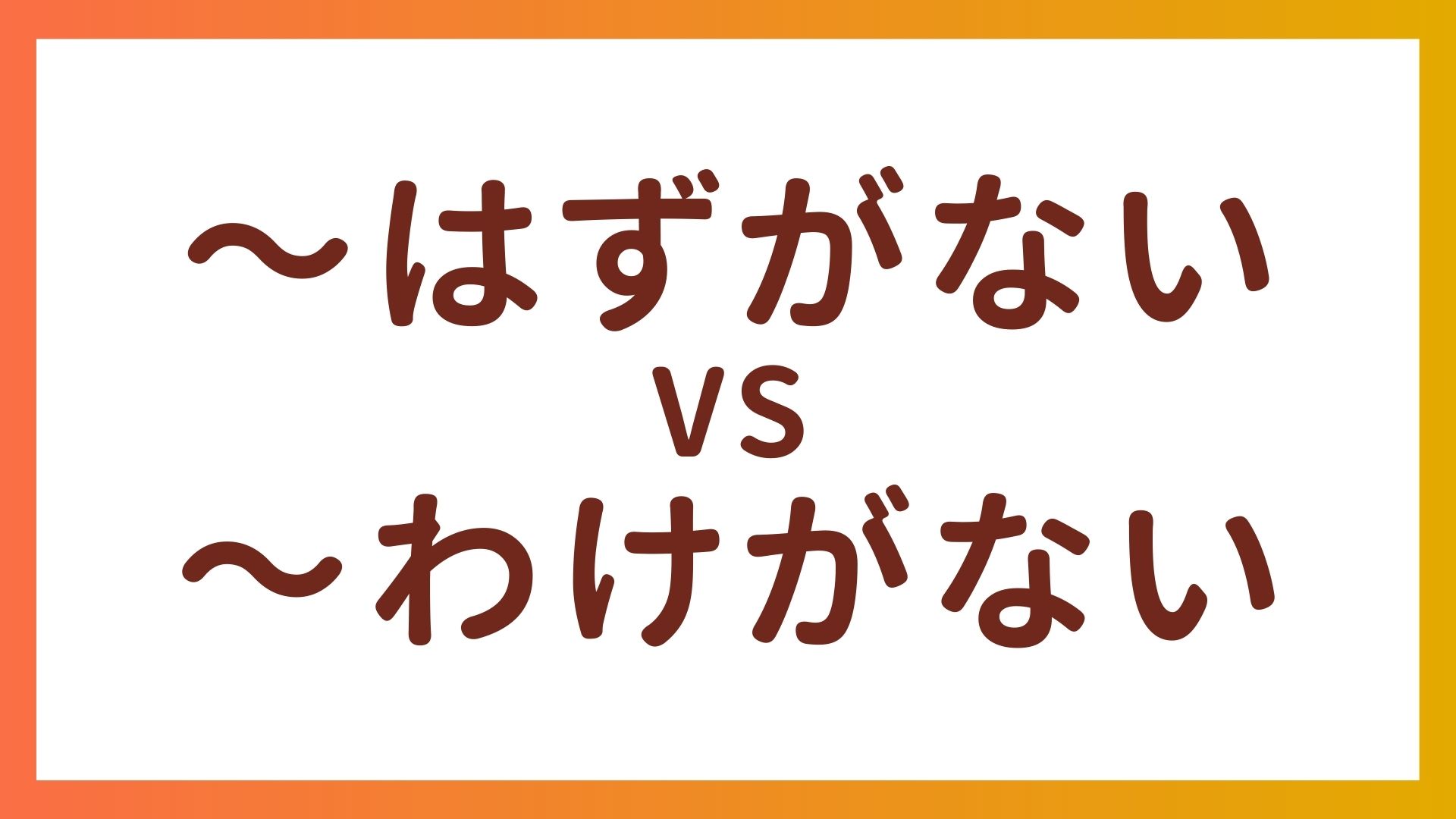
Table of Contents
1. Difference between “〜はずがない” and “〜わけがない”
2. 〜はずがない
3. 〜わけがない
4. Let’s Compare
5. Summary
6. Similer Articles
7. Comment
Q: Can “〜はずがない” and “〜わけがない” be used interchangeably?
A: Both expressions convey a strong denial, meaning “absolutely not” or “there is no such possibility.” However, there is a difference in nuance between them.
〜はずがない (JLPT N3)
[Meaning]
Based on some kind of reason or evidence, it expresses a strong denial that “~ cannot possibly be true.”
[Rule]
[V] Verb plain form + はずがない
[A] い adjective + はずがない
[Na] な adjective + はずがない / な adjective + である + はずがない
[N] Noun + の + はずがない / Noun + である + はずがない
[Examples]
まだ3歳なのに一人で遠くまで行けるはずがないよ。
He is only three years old. There is no way he can go far alone.
あの有名な監督が作った映画なんだ。つまらないはずがない。
That movie was made by a famous director. It cannot be boring.
子供の頃から英会話を習っているんだから、英語が下手なはずがないと思います。
He has studied English conversation since he was a child, so I think he cannot be bad at English.
社長は出張中だよ。似ているけど、あの人が社長であるはずがないよ。
The president is on a business trip now. He looks similar, but that person cannot be the president.
“はずがない” is used when, based on certain facts or circumstances, one logically and objectively concludes that “there is no such possibility.”
In other words, rather than reflecting the speaker’s feelings, it is a negative expression grounded in reasoning that “it is impossible given the situation.”
[Examples]
全然勉強していないんだから、合格するはずがないです。
He did not study at all, so there is no way he will pass.
こんなに安い値段で、本物のダイヤモンドのはずがないよ。
At such a cheap price, it cannot be a real diamond.
彼がそんなこと言うはずがないよ。
He cannot say such a thing.
〜わけがない (JLPT N3)
[Meaning]
An expression used to judge from reasons or grounds and conclude that “~ is impossible” or “there is no way ~ would happen.”
[Rule]
[V] Verb plain form + わけがない
[A] い adjective plain form + わけがない
[Na] な adjective + わけがない / な adjective + である + わけがない
[N] Noun + の + わけがない / Noun + である + わけがない
[Examples]
こんな難しい問題、できるわけがないよ。
There’s no way I can solve such a difficult problem.
A:これ、あまりおいしくないよ。
B:え、ちゃんと分量を量って作ったし、まずいわけがないよ。…あ、塩と砂糖を間違えてた!
A: This doesn’t taste very good.
B:What? I measured the ingredients properly when I cooked, so there’s no way it tastes bad. …Oh no, I mixed up the salt and sugar!
「わけがない」は、ある事実をもとに、主観的で話し手の否定的な強い感情が込められます。
[Examples]
彼が約束を忘れるわけがないよ。
He couldn’t possibly forget the promise.
こんな高価なものを買えるわけがないです。
There’s no way I can afford something this expensive.
Let’s Compare
“はずがない” and “わけがない” are often considered interchangeable, but in reality, there are subtle differences in the speaker’s feelings and perspective, which naturally lead to different uses.
Let’s pay attention to the words in parentheses ( ) and think about the speaker’s state of mind.
[Example]
A:太郎君、来ないね。忘れてるのかな。
B:①(時間やルールに厳しいから)約束を忘れるはずがないよ。
②(友達思いな太郎君が)約束を忘れるわけがないよ。
① “はずがない” is based on objective facts, such as Taro’s habits or personality, leading to a calm judgment of “there’s no such possibility.”
② “わけがない” is rooted in the speaker’s trust and feelings toward Taro, expressing a strong assertion that “such a thing is impossible.”
In short:
はずがない → A judgment based on objective grounds
わけがない → A strong assertion reflecting the speaker’s subjectivity and trust
Thus, although the two expressions are similar, their nuances differ.
Summary
[〜はずがない]
- It is used when making a judgment that “there is no such possibility,” based on facts and by thinking in a commonsense or objective way.
- The nuance strongly conveys a calm, logical reasoning based on evidence.
[〜わけがない]
- Although also based on certain facts, it carries the speaker’s subjective and strong feelings.
- In particular, it often reflects a sense of “trust” or “firm conviction” toward a person or thing, and is used when emotionally denying something as “that can’t possibly be true.”
Similer Articles
- JLPT N3・N4 Grammar – The difference between “〜あいだに”and “〜うちに”
- A Complete Guide to Using “〜じゃん” in Casual Conversations

- JLPT N2・N3 Grammar – The difference between “〜恐れがある” and “〜かねない”
- JLPT N2・N3 Grammar – The difference between “〜に従って” and “〜に沿って”
- JLPT N2・N3 Grammar – The difference between “〜に関して” and “〜をめぐって”

▼ Subscribe to Our Newsletter ▼
Receive free tips for learning Japanese!


