JLPT N3 Vocabulary – Difference between “公平” and “平等”

Table of Contents
1. Difference between “公平” and “平等“
2. 公平
3. 平等
4. Let’s Compare
5. Summary
6. Similer Articles
7. Comment
Q: What is the difference between “公平” and “平等“?
A: Both refer to a “just and unbiased state,” but they differ in perspective.
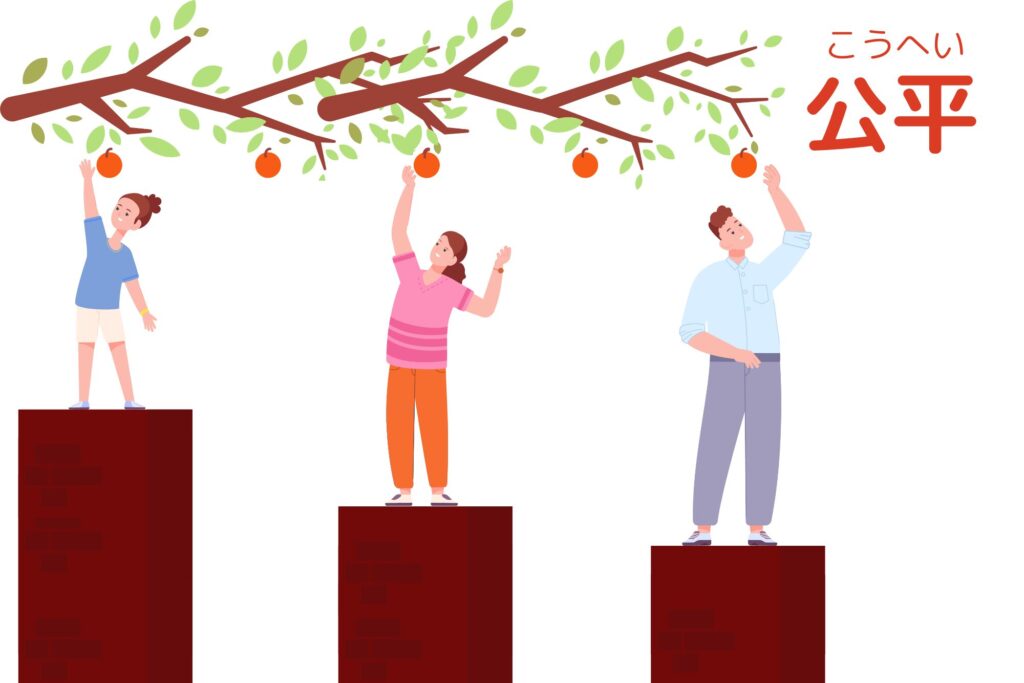
“公平” refers to making adjustments based on each individual’s situation and ability, so that no one is placed at a disadvantage.
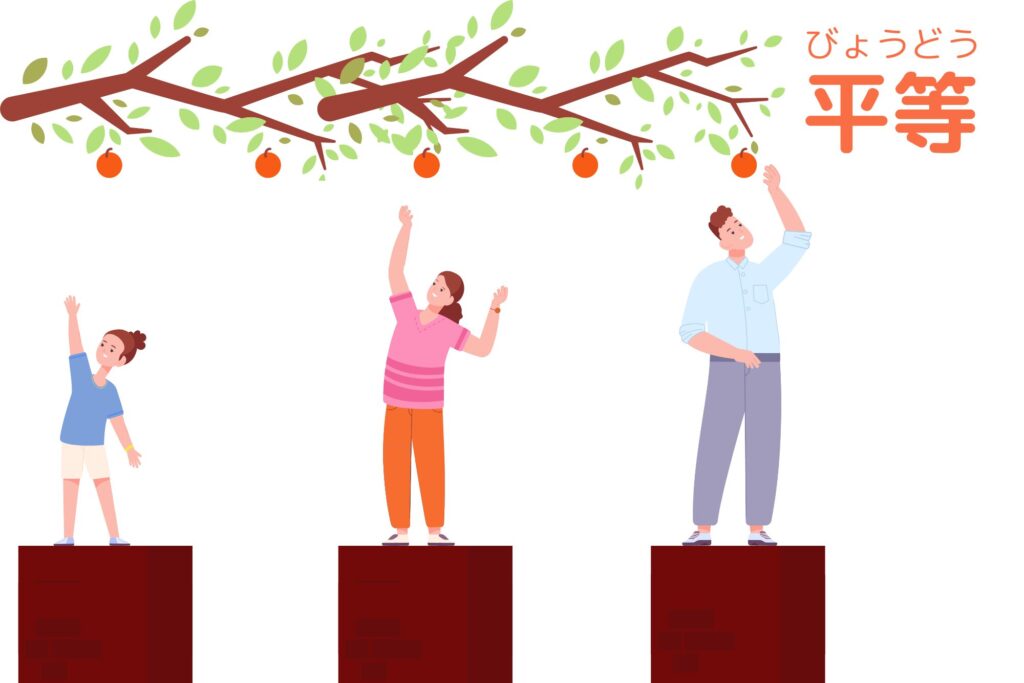
In contrast, “平等“emphasizes treating everyone under the same conditions, aiming to eliminate discrimination and differences.
公平 (JLPT N3)
[Meaning]
① A state in which judgments and treatment are free from bias
② Taking into account the other person’s situation, abilities, and aptitudes to ensure that activities and distribution are carried out under conditions that everyone can perceive as fair
[Examples]
試合の審判は公平に行わなければなりません。(①)
The referee must judge the match fairly.
子供たちに公平にお菓子を分けました。(②)
I divided the sweets fairly among the children.
“公平” refers to responding to all situations impartially, justly, and with balanced consideration. It is a concept that reflects an attitude of ensuring that no one person or side suffers a disadvantage, while avoiding unjust discrimination or favoritism.
[Example ①: Ensuring equal conditions]
教師は生徒に対して公平であるべきです。
Teachers should treat their students fairly.
⇒ This means that teachers should interact with each student in a balanced way, taking into account their individual situations and personalities, so that no one is treated unfairly or placed at a disadvantage.
意見を聞くときは、全員に公平な発言の機会を与えるべきです。
When listening to opinions, you should give all students an equal opportunity to speak.
[Example ②: Making adjustments based on individual circumstances]
試験の際、視覚障がい者に点字や音声での配慮を行い、公平な条件を整えました。
During the exam, accommodations such as Braille and audio support were provided for visually impaired individuals to ensure fair conditions.
⇒ This means adjustments were made according to each person’s situation and ability so that everyone could participate under the same effective conditions.
子ども一人ひとりの理解度に応じて課題の内容を変えることで、公平に学ぶ機会を提供しています。
By modifying the content of assignments based on each child’s level of understanding, we are providing fair learning opportunities for all.
平等 (JLPT N3)
[Meaning]
A state in which there is no discrimination or bias, and all people are treated equally
[Examples]
すべての生徒に平等にチャンスを与えます。
All students are given equal opportunities.
法の下では誰もが平等でなければなりません。
Under the law, everyone must be treated equally.
“平等” is a concept that emphasizes treating all people the same in terms of status, rights, opportunities, and treatment.
Regardless of individual circumstances or differences, the focus is on providing the same conditions to everyone.
[Examples]
すべての人に平等な教育の機会を与えることが大切です。
It is important to provide equal educational opportunities to all people.
⇒ This reflects the idea that everyone should have the same access to education.
法の下では、すべての国民が平等です。
Under the law, all citizens are equal.
⇒ This expresses the principle that legal rights and obligations apply equally to all individuals.
父の遺産を兄弟で平等に分けました。
We divided our father’s inheritance equally among the siblings.
⇒ This means it was divided so that everyone received the same amount.
Let’s Compare
Which is more appropriate in the following examples: “公平” or “平等” ?
[Example]
①子どもたちの年齢や体格を考えて公平におやつを分けました。
②子どもたちの年齢や体格を考えて平等におやつを分けました。
The correct answer is ①.
Since the snacks were divided with consideration for age and body size, the amount was adjusted to suit each child. Therefore, “公平” is appropriate, as it involves making adjustments based on individual circumstances.
Now, consider the next example:
[Example]
①選挙はすべての国民に公平に与えられた権利です。
② 選挙はすべての国民に平等に与えられた権利です。
The correct answer is ②.
This expresses the idea that all citizens have the same right to vote under the same conditions. Thus, “平等” is the more suitable expression here.
Summary
[公平]
- ① A state in which judgments and treatment are free from bias.
- ② Taking into account the other person’s situation, abilities, and aptitudes to ensure that activities and distribution are carried out under conditions that everyone can perceive as “fair.”
- Key point: It reflects an attitude of making thoughtful adjustments so that no one is disadvantaged, ensuring balanced treatment.
[平等]
- A state in which there is no discrimination or bias, and everyone is treated the same.
- In terms of status, rights, opportunities, and treatment, all people are handled “in the same way.”
- Key point: Emphasis is placed on achieving the same outcome, where everyone receives the same conditions and treatment.
Similer Articles
- JLPT N2・N3 Grammar – The difference between “〜に従って” and “〜に沿って”
- JLPT N2・N3 Grammar – The difference between “〜に関して” and “〜をめぐって”

- JLPT N2・N3 Grammar – The difference between “〜わりに” and “〜にしては”
- JLPT N1・N3 Grammar – The difference between “〜さえ” and “〜すら”
- JLPT N3・N4 Vocabulary – The difference between “特に” and “別に”
▼ Subscribe to Our Newsletter ▼
Receive free tips for learning Japanese!


