
JLPT N2・N4 Vocabulary – The difference between “冷える” and “冷やす”

Table of Contents
1. Difference between “冷える” and “冷やす”
2. Intransitive and Transitive Verbs
3. 冷える
4. 冷やす
5. Summary
6. Quiz
7. Similar Articles
8. Comments
Q: What is the difference between “冷える” and “冷やす”?
A: Japanese learners often confuse “冷える” and “冷やす.”
Both relate to a drop in temperature, but their usage is actually completely different.
In this article, we will clearly explain the difference between these two words from the perspective of intransitive and transitive verbs.
Intransitive and Transitive Verbs
First, let’s review the differences between intransitive and transitive verbs.
[Intransitive Verbs]
- Indicate automatic or natural actions.
- Involve the ‘subject’ itself in performing the ‘action.’
- Often, they are formed as [Subject が Intransitive verb].

[Transitive Verbs]
- Indicate intentional actions.
- Involve the ‘agent’ acting upon the ‘object.’
- Often, they are formed as [Doer は Object を Transitive verb].

However, there are exceptions, so be careful!

For those who want to learn more
about the differences between
Intransitive and transitive verbs,
please read this article.
冷える (JLPT N4)
[Meaning]
It expresses a situation where the temperature drops naturally, without the speaker’s intention, or when something becomes cold.
[Point]
• It is used in the form “(naturally) ~が冷える.”
• It is used when something becomes cold due to cold weather or simply over time.
[Examples]
寒くて体が冷えました。
It was cold and my body got chilled.
⇒My body temperature dropped because of the cold weather.
クーラーで部屋が冷えました。
The room got cold because of the air conditioner.
⇒ The air conditioner caused the room temperature to drop.
夜になって、急に冷えてきましたね。
It has suddenly gotten chilly now that it’s night.
⇒ The temperature dropped naturally due to a change in the weather.

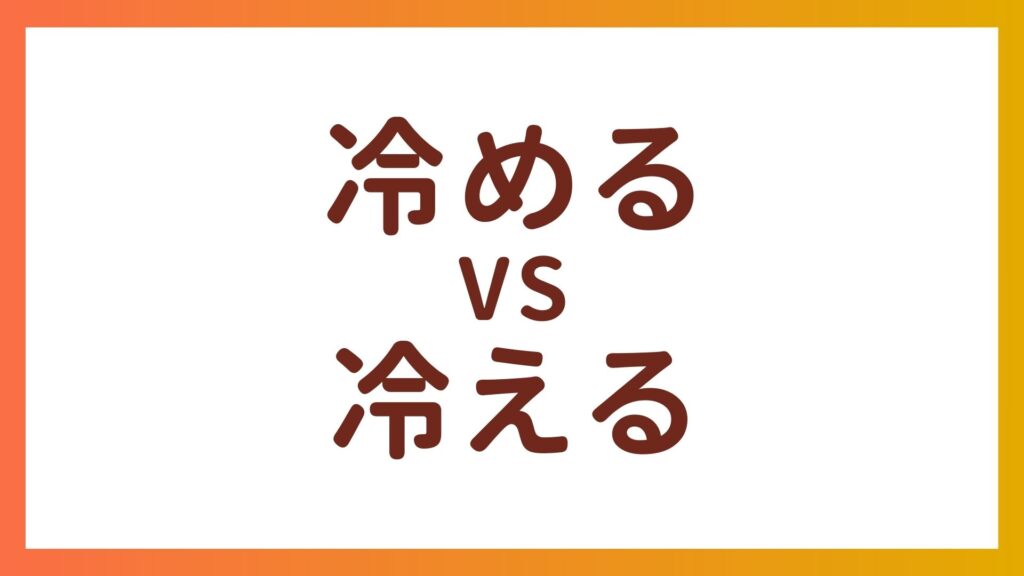
JLPT N3 Vocabulary
Difference between “冷める” and “冷える”
冷やす (JLPT N2)
[Meaning]
It expresses that someone intentionally lowers the temperature of something.
[Point]
• It is used in the form “(a person) ~を冷やす.”
• It is used when someone consciously makes something cold using tools such as ice, water, or a refrigerator.
[Examples]
やけどしたところを水で冷やしました。
I cooled the burn with water.
⇒ I lowered the temperature of the burned area using water. Using water was the speaker’s intention.
パーティーの前に、シャンパンを氷で冷やしておきましょう。
Let’s chill the champagne with ice before the party.
⇒ The temperature is intentionally lowered using ice.
スープを冷蔵庫に入れて冷やしました。
I chilled the soup by putting it in the refrigerator.
⇒ I lowered the temperature of the soup in the refrigerator. Putting it in the refrigerator was the speaker’s intention.

Summary
[冷える]
- Intransitive verb.
- It describes a situation where the temperature of something drops without the speaker’s intention.
- It becomes lower than its original temperature naturally, even without anyone doing anything.
[冷やす]
- Transitive verb.
- It describes a situation where the speaker’s intention is involved and the temperature of something is lowered using some external means.
- It means that a person intentionally makes something cold.
Quiz
Is the verb used in the following sentence an intransitive or a transitive verb?
Click on the question to check the answer.
A.冷やす
ビールを冷蔵庫で冷やすとおいしいです。
Beer tastes better when you chill it in the refrigerator.
*Putting the beer in the refrigerator is the speaker’s intention.
A. 冷えて
冷たい風で体が冷えてしまいました。
My body got chilled by the cold wind.
*The cold wind naturally lowered my body temperature. It was not the speaker’s intention.
熱が出たので、氷で頭を冷やしています。
I have a fever, so I’m cooling my head with ice.
*The temperature is being lowered intentionally using an external means (ice).
A. 冷える
料理が冷える・とおいしくないですよ。
Food doesn’t taste good when it gets cold.
*The temperature of the food drops naturally.
Similar Articles
- JLPT N2・N4 Vocabulary – The difference between “冷える” and “冷やす”
- JLPT N4・N5 Vocabulary – Difference between the counter “回” and “度”
- JLPT N2 Grammar – The difference between “〜あげく” and “〜末に”
- JLPT N3・N4 Vocabulary – The difference between “特に” and “別に”
- JLPT N4 Vocabulary – The difference between “もうすぐ” and “そろそろ”
▼ Subscribe to Our Newsletter ▼
Receive free tips for learning Japanese!


