
JLPT N1 Grammar – Difference between “〜こそあれ” and “〜こそすれ”
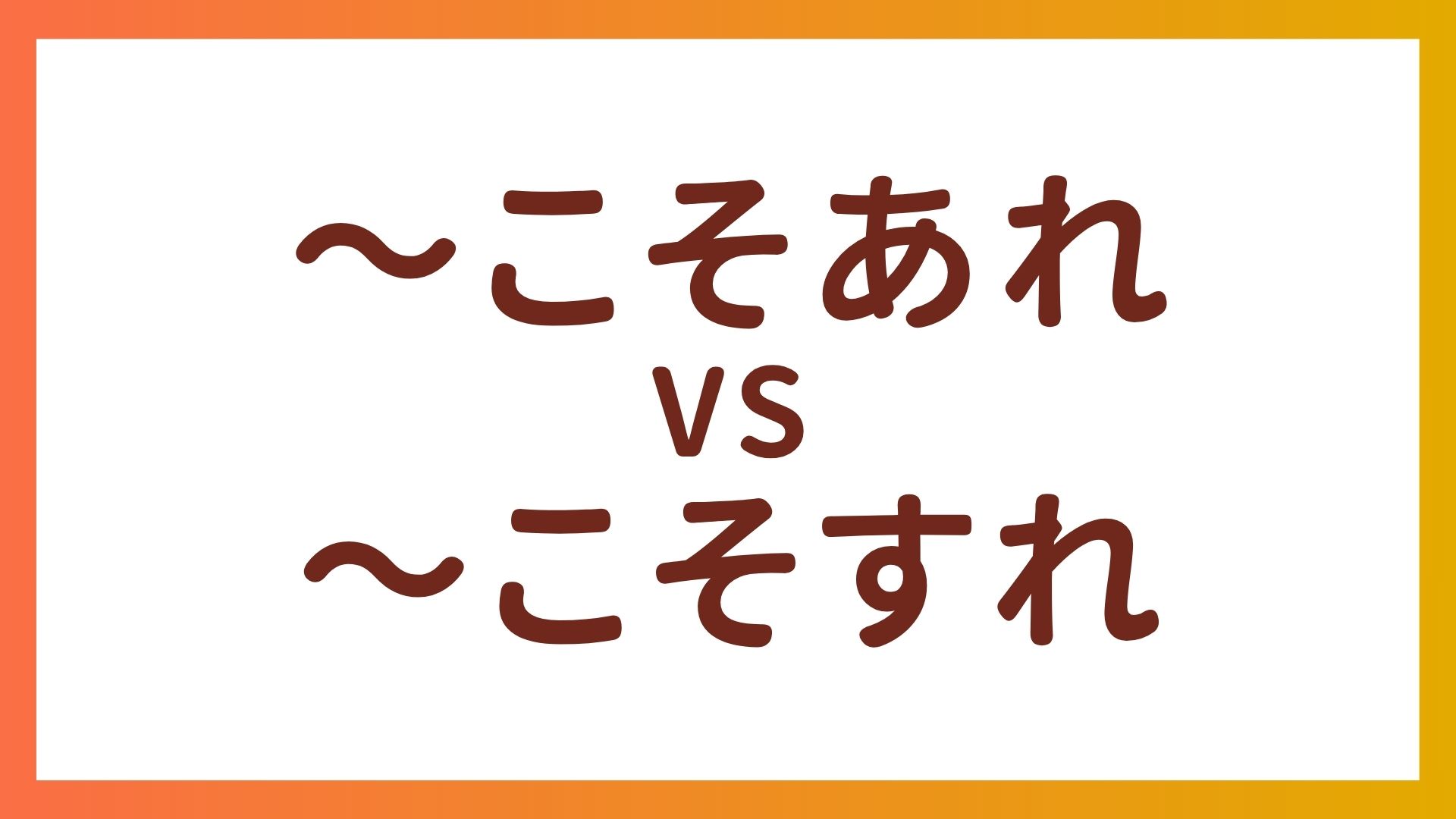
Table of Contents
1. Difference between “〜こそあれ” and “〜こそすれ”
2. Aこそあれb
3. AこそすれB
4. Let’s Compare
5. Summary
6. Similer Articles
7. Comment
Q: What is the difference between ”〜こそあれ” and ”〜こそすれ”?
A: Both are classical and old-fashioned grammatical expressions. ”こそあれ” is an expression that emphasizes contrast, carrying the nuance of “although 〜.” On the other hand, ”こそすれ” is a decisive expression that acknowledges A but strongly denies anything else.
AこそあれB (JLPT N1)
[Meaning]
A may be true, but B is not
A is acknowledged as true, but B is / is not
[Rule]
[A] い adjective い + さ + こそあれ
[Na] な adjective な + で + こそあれ
[N] Noun + こそあれ
[Examples]
学ぶ難しさこそあれ、楽しみもあります。
There may be difficulties in learning, but there is also enjoyment.
苦労こそあれ、得るものも多いですよ。
There may be hardships, but there is also much to gain.
It is used with a meaning similar to “〜ではあるが” or “〜でこそあるが,” but ”こそあれ” has the function of emphasizing A more strongly. A contains an acknowledged fact, and B follows with an opposite fact.
[Examples]
多少の不安こそあれ、計画は順調に進んでいます。
There may be some anxiety, but the plan is progressing smoothly.
⇒ There is some anxiety, but overall, things are going well.
苦労こそあれ、この仕事にはやりがいがあります。
There may be hardships, but this job is rewarding.
反対意見こそあれ、大多数の人がその提案を支持しています。
There may be opposing opinions, but the majority of people support the proposal.
AこそすれB (JLPT N1)
[Meaning]
A may be true, but it is absolutely not B
[Rule]
[V] Verb stem + こそすれ
[N] Noun + こそすれ
[Examples]
彼のことは信頼こそすれ、疑ったことなど一度もありません。
I may trust him, but I have never once doubted him.
彼女は遅刻こそすれ、約束を破ることは決してないですよ。
She may be late, but she would never break a promise.
It is used with the meaning “A may be true, but apart from that, it is B.” ”こそすれ” is a decisive expression that, while acknowledging the fact of A, completely denies B.
[Examples]
年を取って体力は衰えこそすれ、気力は今も若いころのままです。
I may have lost physical strength with age, but my spirit remains the same as when I was young.
⇒ I acknowledge the decline in physical strength, but in every other way, I have not weakened.
日本の人口は減りこそすれ、増えることはないでしょう。
Japan’s population may decrease, but it will not increase.
台風の勢いは増しこそすれ、衰える気配は全くありません。
The typhoon’s strength may increase, but there is no sign of it weakening at all.
Let’s Compare
Let’s organize the differences between ”AこそあれB” and ”AこそすれB.”
AこそあれB: A contains an emphasized contrast, and B states a fact that is the opposite of A.
AこそすれB: A is acknowledged as true, but anything else (B) is not accepted or does not happen. Therefore, B contains content that contrasts with A or denies anything other than A.
[Examples]
苦労こそあれ、その経験には大きな意味がありました。
There may have been hardships, but the experience had great meaning.
⇒ There were hardships, but I gained a meaningful experience.
苦労こそすれ、無駄なことは一つもありませんでした。
There may have been hardships, but there was not a single moment wasted.
⇒ There were hardships, but there was absolutely no wasted time.
Summary
| Meaning | Nuance | Content following B | |
|---|---|---|---|
| AこそあれB | A may be true, but B is not. While acknowledging A, B states the opposite fact. | Expresses contrast while emphasizing A. | B contains a fact that is opposite to A. |
| AこそすれB | A is acknowledged as true, but anything else (B) is not accepted or does not happen. | A limiting expression that strongly denies anything other than A. | B contains content that contrasts with A or denies anything other than A. |
Similer Articles
▼ Subscribe to Our Newsletter ▼
Receive free tips for learning Japanese!


